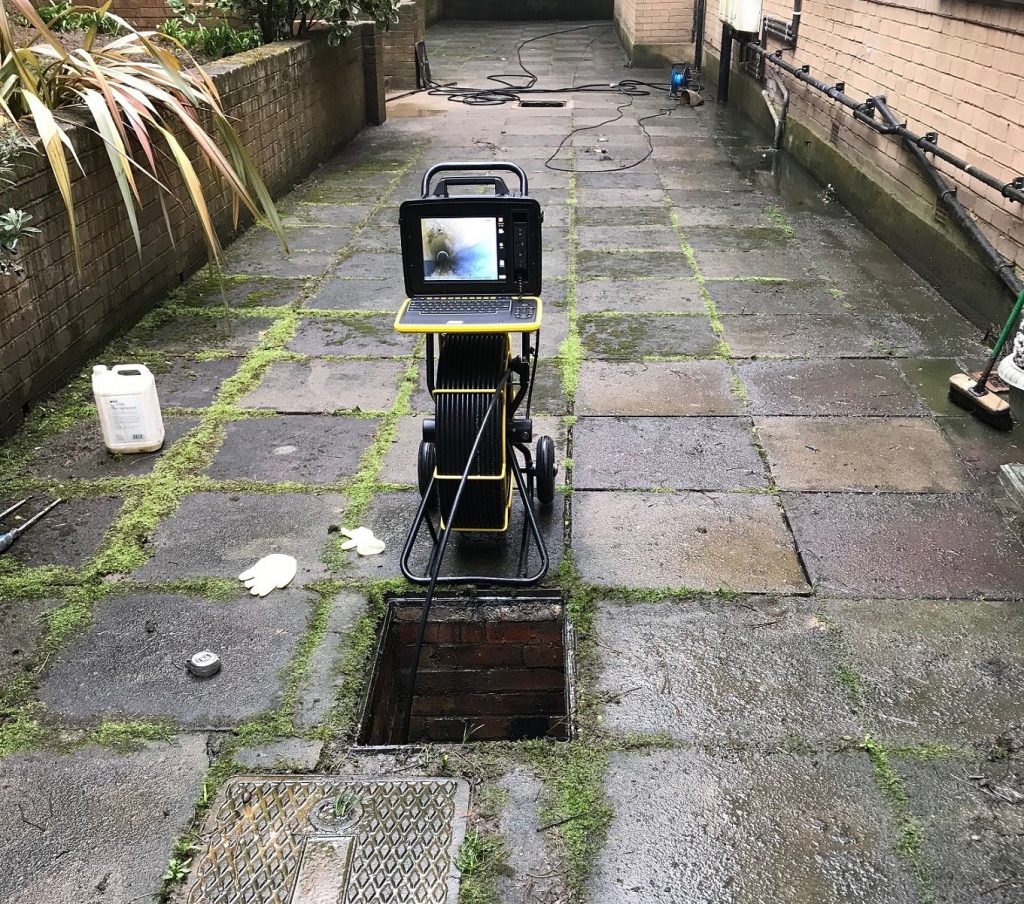
A CCTV drain survey is the most reliable way to diagnose drainage problems in London properties — blocked drains, root intrusion, collapsed sections and poor connections. Here is when to commission one and what to expect.
London's drainage infrastructure spans hundreds of years. Victorian brick sewers, clay pipe runs and modern plastic drainage all coexist under the city's streets and gardens. When drainage problems occur — recurring blockages, bad smells, slow drainage or unexplained damp — a CCTV drain survey is the most accurate diagnostic tool available. It removes the guesswork and prevents unnecessary excavation.
What is a CCTV drain survey?
A CCTV drain survey involves passing a small camera on a flexible rod through the drain network from an accessible access point. The camera transmits live video to a monitor on the surface, allowing the engineer to inspect the condition of the drain as the camera progresses. The survey is recorded and a written report produced with still images or video clips of any findings.
What can a CCTV survey identify?
A properly conducted CCTV survey can identify:
- Blockages — fat, scale, wipes and debris accumulations
- Root intrusion — tree roots entering through joints, particularly in older clay pipe runs
- Pipe collapse or fracture — particularly common in older vitrified clay runs that have settled over time
- Joint displacement — pipes that have shifted and created a step that catches debris
- Rat runs — evidence of rodent ingress through damaged sections
- Incorrect gradients — sections where pipes run level or back-fall, causing standing water
- Infiltration — groundwater entering through cracks or failed joints
When does a London property owner need a CCTV survey?
Common triggers for commissioning a CCTV survey include:
- Recurring drain blockages that clear but keep coming back
- Bad smells from drains or in the garden
- Slow drainage throughout the property
- Before buying a property — a pre-purchase drainage survey reveals drain condition before exchange
- After a tree is removed — to check whether root intrusion has occurred
- After subsidence or ground movement in the area
- When planning a loft conversion or extension — to check drainage routes and condition
What happens after the survey?
The survey report will grade any findings by severity. Minor scale build-up may require a jetting clean. Root intrusion may be treated by cutting roots and then relining the pipe from the inside. A collapsed section typically requires excavation and replacement, though resin relining can sometimes avoid excavation in accessible pipe runs. The report gives you the basis for comparing quotes for remedial work.
Frequently asked questions
How much does a CCTV drain survey cost in London?
Typically £150–£350 for a residential CCTV survey, depending on the length of the drain run and number of access points. Drainage surveys for commercial or larger properties are priced on site.
Do I need a CCTV survey before buying a house?
It is strongly recommended, particularly for older properties. A pre-purchase drainage survey can reveal collapsed drains, root intrusion or defective connections that would be expensive to repair after purchase.
Can a blocked drain be cleared without a CCTV survey?
Yes — many blockages are cleared by jetting without needing a survey. However, if the blockage recurs, or if there is reason to suspect structural damage, a survey is recommended before further jetting.
Who is responsible for drains — the homeowner or Thames Water?
Drains within the property boundary are the homeowner's responsibility. Shared sewers (serving more than one property) became the responsibility of water companies in 2011. Thames Water is responsible for the public sewer network.