What Does a Boiler Service Include? A London Homeowner Guide to What Engineers Check
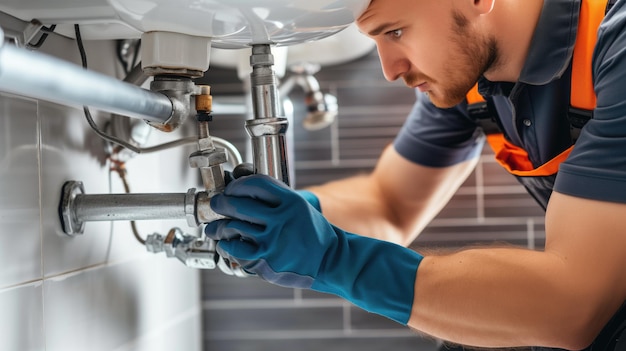
Many London homeowners book annual boiler services without knowing what should actually be covered. Understanding what a thorough service includes helps you assess whether your engineer is doing a proper job and whether the price you are paying is fair.
What a Boiler Service Should Cover
An annual boiler service is not simply a visual inspection. A thorough service by a qualified Gas Safe registered engineer should involve a sequence of physical checks, component inspections, combustion analysis, and operational tests that collectively verify the boiler is functioning safely and efficiently. The entire process should take between forty-five minutes and ninety minutes depending on the boiler type, age, and condition. A service completed in fifteen or twenty minutes is almost certainly not covering all the required elements.
The service begins with an external inspection of the boiler casing, the flue terminal visible from outside the property, and the gas supply pipework up to the boiler. The engineer checks the boiler casing for damage or signs of overheating, verifies that the flue terminal is unobstructed and correctly positioned, and confirms that the gas pipework and connections are free from corrosion, mechanical damage, and visible leaks.
Internal Component Checks
The engineer removes the boiler casing to access the internal components. The heat exchanger is inspected for signs of cracking, corrosion, or sooting. A cracked heat exchanger is one of the most serious boiler defects because it can allow combustion products, including carbon monoxide, to contaminate the hot water or central heating circuit. The burner is removed and inspected for sooting, blockage, or damage. Burner nozzles and electrodes are checked for wear and correct positioning. In condensing boilers, the condensate trap is checked and cleared of any sludge or blockage, and the condensate drain is verified as free-flowing.
The gas valve is checked for correct operation and the correct gas pressure is verified at the burner inlet. The heat exchanger is cleaned to remove any accumulated scale or combustion residue that reduces thermal efficiency. The fan and air intake are checked for correct operation and the flue gas flow is verified. The expansion vessel pre-charge pressure is checked and adjusted if required. The pressure relief valve is inspected and the system pressure is verified as within the correct operating range.
Combustion Analysis
One of the most important parts of a proper boiler service is combustion analysis using a calibrated flue gas analyser. The analyser probe is inserted into the flue test point, and the boiler is run at full load while the analyser measures the concentrations of carbon dioxide, carbon monoxide, and oxygen in the flue gas. These readings confirm whether the burner is burning gas efficiently and safely.
The carbon dioxide reading indicates combustion efficiency. The target range for natural gas is typically between eight and ten percent carbon dioxide in the flue gas. A reading significantly outside this range indicates that the air-to-gas ratio needs adjustment, which reduces efficiency and increases running costs. The carbon monoxide to carbon dioxide ratio is the critical safety indicator. A high ratio indicates incomplete combustion and the potential for elevated carbon monoxide in the flue gas. If this ratio exceeds acceptable limits, the engineer must investigate the cause and rectify it before completing the service.
Controls, Safety Devices, and System Checks
The boiler controls are tested for correct operation. This includes the thermostat or programmer control, the zone valves for properties with multiple heating zones, the overheat thermostat or high limit cut-out, the frost thermostat where fitted, and the pressure sensor. The hot water production is tested and verified as reaching the correct temperature. The central heating flow is verified and the radiator balance is noted, with recommendations made if significant imbalance is observed.
The engineer checks for any error codes or fault history stored in the boiler control unit. On modern boilers, the fault history provides valuable diagnostic information about intermittent problems that are not immediately apparent during the service visit. A competent engineer will download or record this information and explain any patterns that suggest components approaching failure.
What a Service Does Not Include
A boiler service does not include power flushing the central heating system, bleeding radiators, replacing thermostatic radiator valves, or repairing faults that are identified during the service. If the engineer identifies a defective component, they will advise on the repair required and the cost, but the service price covers the inspection and service work only. Replacement parts are charged additionally. Prestige Engineers carry out boiler services across all London boroughs, completing full combustion analysis, component inspection, and written service records for every visit.