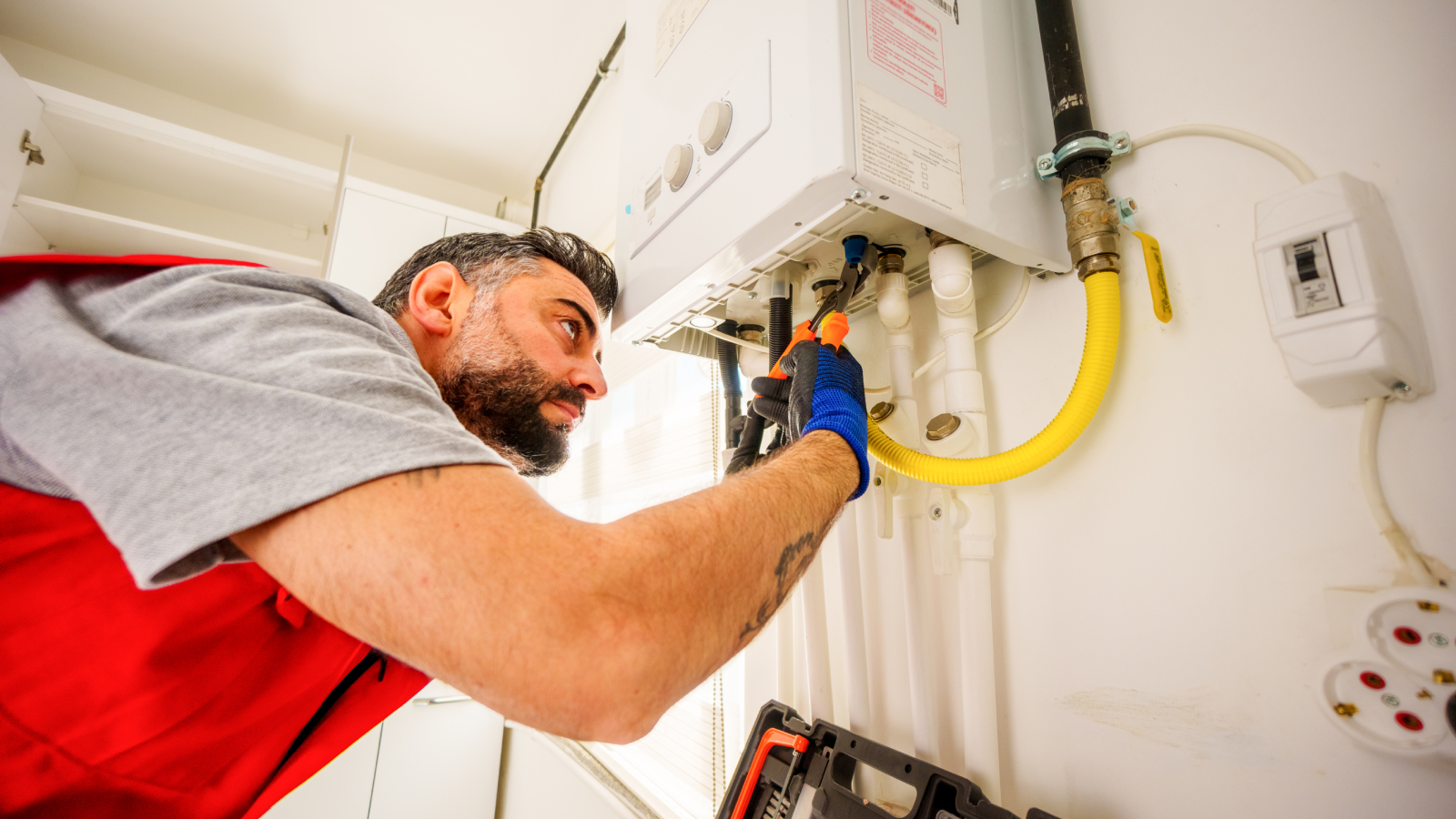
High boiler pressure is one of the most common heating complaints in London homes, particularly in properties with combi boilers. Left unaddressed, it can trigger the pressure relief valve, cause leaks, or shorten your boiler's lifespan. This guide explains the causes, how to reduce pressure safely, and when to call a Gas Safe registered engineer.
A healthy combi or system boiler should operate at between 1 and 1.5 bar when cold. When pressure climbs above 2.5 bar, most boilers display an error code or the needle on the pressure gauge enters the red zone. For London homeowners — particularly those in older Victorian or Edwardian terraces — this is a frequent issue that deserves prompt attention.
What Does High Boiler Pressure Actually Mean?
Boiler pressure refers to the pressure of the water circulating through your central heating system. It is not the same as your mains water pressure. In a sealed system, this pressure is maintained by a component called the expansion vessel, which absorbs the increase in water volume as it heats up. When the expansion vessel fails or the system is over-filled, pressure rises beyond safe operating limits.
Most modern boilers — including popular models from Worcester Bosch, Vaillant, and Ideal — will lock out automatically when pressure exceeds around 3 bar, displaying fault codes such as E119, F22, or A1 depending on the manufacturer. This is a safety feature, not a fault in itself.
Common Causes of High Boiler Pressure in London Homes
- Over-filling via the filling loop: The most frequent cause. If the filling loop — the braided hose connecting mains water to the heating circuit — is left open or has a faulty valve, water continues entering the system and pressure climbs. This is especially common after a homeowner re-pressurises the boiler following a drop.
- Failed expansion vessel: The expansion vessel contains a pressurised bladder that accommodates the increase in water volume as your system heats. If the bladder ruptures or loses its pre-charge pressure, the vessel can no longer buffer expansion and system pressure spikes each time the boiler fires. This is a common finding in boilers over eight years old.
- Faulty pressure relief valve (PRV): A PRV that no longer seats correctly can allow pressure to build without discharging, or conversely discharge water into the overflow pipe even at normal pressures. If you notice water dripping from the external overflow pipe on your property — typically a 15mm copper pipe exiting through an external wall — this is a strong indicator.
- Blocked or undersized heating circuit: In London properties with multiple radiator zones or long pipework runs, partial blockages from sludge or magnetite can restrict flow and cause localised pressure build-up. Older properties with original 15mm pipework are particularly susceptible.
How to Reduce Boiler Pressure Safely
If your gauge reads above 2 bar and the boiler has not yet locked out, you can attempt to reduce pressure yourself by bleeding a radiator. Use a radiator bleed key to open the bleed valve on an upstairs radiator slightly — water or air will escape, reducing system pressure. Keep a cloth ready and monitor the gauge; close the valve once pressure returns to 1–1.5 bar.
Alternatively, if your system has a drain-off valve (a small tap at a low point on the pipework, often near the boiler), you can attach a hose and release a small amount of water into a bucket. Turn the valve slowly and watch the gauge carefully.
Do not attempt to adjust the expansion vessel pre-charge pressure or tamper with the pressure relief valve. These tasks require isolation of the system, specialist tools, and in some cases must be carried out by a Gas Safe registered engineer to remain compliant with Part L of the Building Regulations and manufacturer warranty terms.
When to Call a Gas Safe Engineer
Reducing pressure manually is a temporary measure. If pressure returns to a high level within a few days of bleeding or draining, the underlying fault — most likely the expansion vessel or filling loop valve — must be diagnosed and repaired. Continuing to operate a boiler repeatedly locking out on high pressure risks damage to the heat exchanger, a component that typically costs £300–£600 to replace.
London landlords should be aware that a boiler fault causing disruption to heating or hot water may engage obligations under Section 11 of the Landlord and Tenant Act 1985, requiring repair within a reasonable timeframe. Proactive annual servicing by a Gas Safe registered engineer — a requirement under most tenancy agreements and a strong recommendation under the Gas Safety (Installation and Use) Regulations 1998 — is the most reliable way to catch expansion vessel degradation before it causes a breakdown.
Preventive Maintenance
For London properties, particularly those in boroughs with hard water such as Enfield, Barnet, and Bromley, a scale reducer or magnetic system filter fitted to the boiler return pipe will significantly extend boiler and expansion vessel life. Limescale deposits accelerate heat exchanger wear and contribute to sludge accumulation, both of which raise operating pressures over time.
An annual boiler service includes a pressure check, inspection of the expansion vessel pre-charge, and examination of the PRV — catching these issues early keeps repair costs low and ensures your boiler remains within manufacturer warranty and Gas Safe compliance requirements.
Frequently asked questions
Is it safe to use my boiler if the pressure is above 2 bar?
A reading between 2 and 2.5 bar is elevated but the boiler will typically continue to operate. Above 2.5 bar you should attempt to reduce pressure by bleeding a radiator, and above 3 bar the boiler will usually lock out automatically as a safety measure — do not attempt to override this.
How often does an expansion vessel need replacing?
Expansion vessel bladders typically last 8 to 12 years depending on system water quality and operating temperature. In hard water areas of London, replacement may be needed sooner. A Gas Safe engineer can test the pre-charge pressure with a simple gauge check during an annual service.
Can high boiler pressure damage my radiators or pipework?
Sustained high pressure can stress radiator valves, flexible hoses at the boiler, and older soldered joints, increasing the risk of leaks. In properties with original pipework — common in Victorian terraces across inner London — this is a genuine concern that warrants prompt investigation.
Does a landlord need to fix high boiler pressure before a tenant moves in?
Yes. A landlord must ensure the heating system is in safe working order before a tenancy begins, as required by Section 11 of the Landlord and Tenant Act 1985. A boiler repeatedly locking out on high pressure would not meet this standard, and an annual Gas Safety Certificate (CP12) is a legal requirement for all privately rented properties.