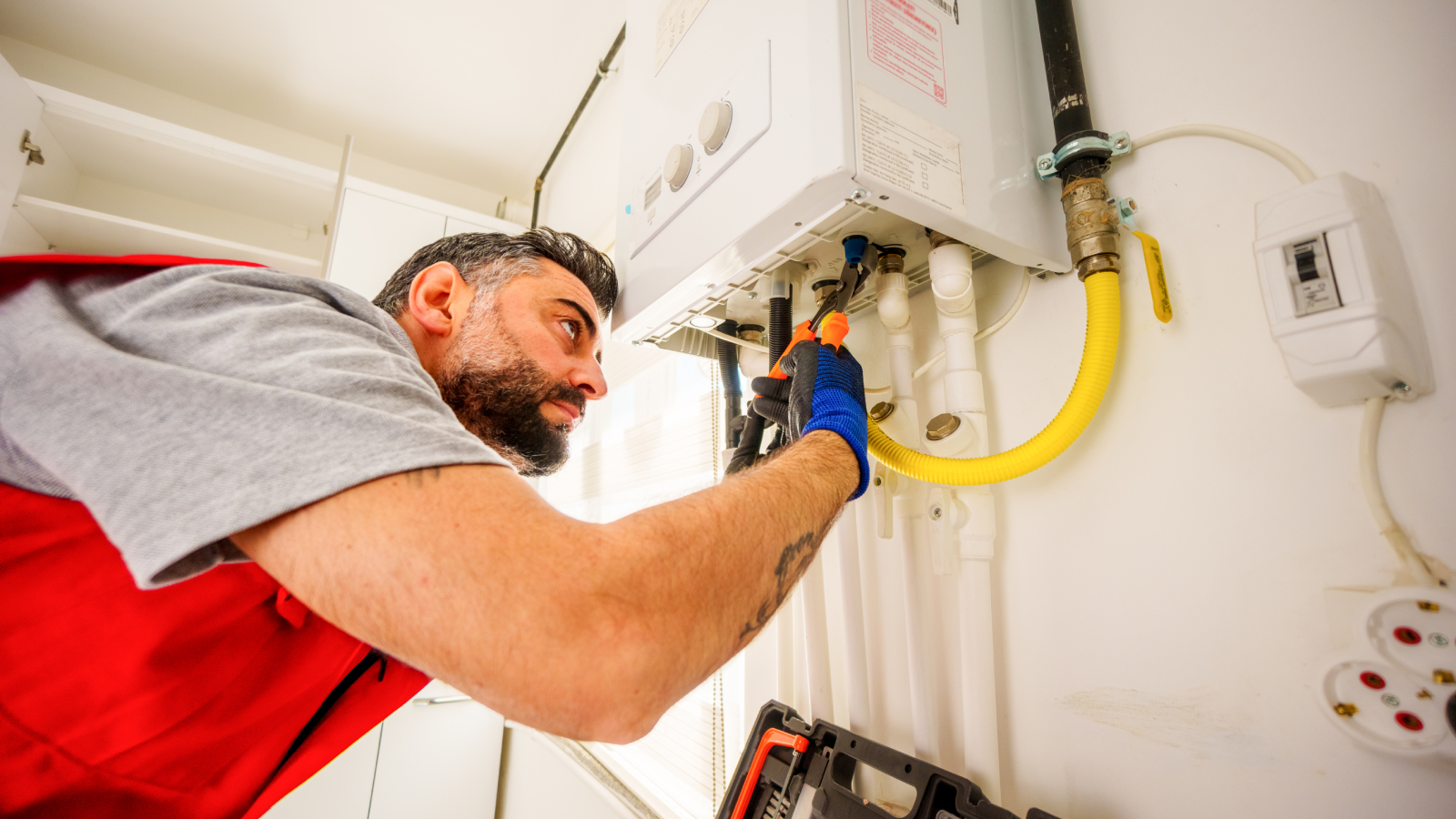
If you keep refilling your boiler pressure every few weeks, there is a leak somewhere in your heating system. This guide explains every cause of recurring pressure loss and how to find it.
Why Boiler Pressure Keeps Dropping
A correctly sealed heating system should maintain its pressure almost indefinitely — pressure drops of more than 0.2 bar per month indicate water is leaving the system somewhere. There are only a handful of places this can happen.
The Expansion Vessel: Most Common Cause
The expansion vessel is a pressurised tank (inside most modern combi boilers, external on older systems) that accommodates the expansion of water as it heats. It contains a rubber diaphragm separating a water side from an air/nitrogen pre-charge side.
When the diaphragm perforates or the pre-charge pressure drops below the static system pressure, the expansion vessel stops doing its job. The pressure relief valve then releases water each time the system heats up — a slow but steady pressure loss that typically requires weekly or monthly topping up.
How to check: With the system cold and depressurised, use a tyre pressure gauge on the Schrader valve (usually on the side of the boiler or on a separate external vessel). It should read approximately 0.75-1.0 bar. If it reads 0 or releases water (not air), the diaphragm has failed — the vessel needs replacing or re-pressurising.
Leaking Radiator Valves
TRV (thermostatic radiator valve) and lockshield valve bodies can develop slow weeps at the valve stem or at the compression joint connecting them to the pipework. These are often invisible because the water evaporates before pooling — the only sign is a faint salt/mineral deposit around the valve body or joint.
Check every valve in the property — feel and look carefully at all joints. London's hard water leaves white calcium deposits at even the smallest weeps.
Leaking Radiator Body
Pinhole leaks in radiator panels are caused by internal corrosion (particularly in London hard water systems without inhibitor). The leak is often on the back face of the radiator, invisible until you feel for moisture or notice a patch of rust-coloured staining on the wall behind.
Heat Exchanger Micro-Leak
The heat exchanger in a combi boiler is the component through which the boiler's heating circuit water flows adjacent to the domestic hot water side. Scale deposits and corrosion can cause micro-cracks in the heat exchanger that allow water to seep into the flue or combustion chamber — where it evaporates without creating a visible external leak.
Signs of heat exchanger leak: white scale/powder residue visible through the boiler air vent, occasional slight drop in pressure after a hot water draw, or boiler runs fine on heating but loses pressure faster when hot water is used. Requires Gas Safe engineer diagnosis and usually heat exchanger replacement (£300-800 parts and labour).
Buried or Hidden Pipe Leak
If no visible leak can be found at valves, radiators, or the boiler itself, the leak may be in pipework running under floorboards, through walls, or under concrete screed. Acoustic leak detection or thermal imaging can locate these without destructive investigation.
Filling Loop Left Open
If the filling loop (the small valve or lever used to repressurise the system) has not been fully closed after topping up, it allows mains water into the system continuously — causing the system to overpressurise, the pressure relief valve to discharge, and then underpressurise in a cycle. Check the filling loop is fully closed.
Frequently asked questions
How often should I need to top up my boiler pressure?
A correctly sealed system should not need topping up more than once or twice a year at most. If you need to top up monthly or more frequently, there is a leak or a failed expansion vessel. Both require investigation rather than continuing to top up.
Can I keep topping up boiler pressure rather than fixing the leak?
Short-term yes, but it causes problems over time. Repeatedly adding fresh mains water to the system introduces oxygen (causing corrosion) and calcium (causing scale). It also dilutes the inhibitor that protects the system from corrosion and sludge. Fix the underlying cause within a few months of noticing recurring pressure loss.
How much does it cost to fix boiler pressure loss in London?
Expansion vessel re-pressurising: £80-150. Expansion vessel replacement: £150-300. Radiator valve replacement: £80-150 per valve. Heat exchanger replacement: £300-800. Hidden pipe leak detection and repair: £300-800+. A Gas Safe engineer can diagnose the cause in one visit.
Why does my boiler pressure drop when I use hot water?
This is often a sign of a heat exchanger leak or a failing expansion vessel specifically on the hot water side. The pressure drop is specifically linked to hot water use because that is when differential pressure across the heat exchanger is highest. Call a Gas Safe engineer to inspect the heat exchanger.