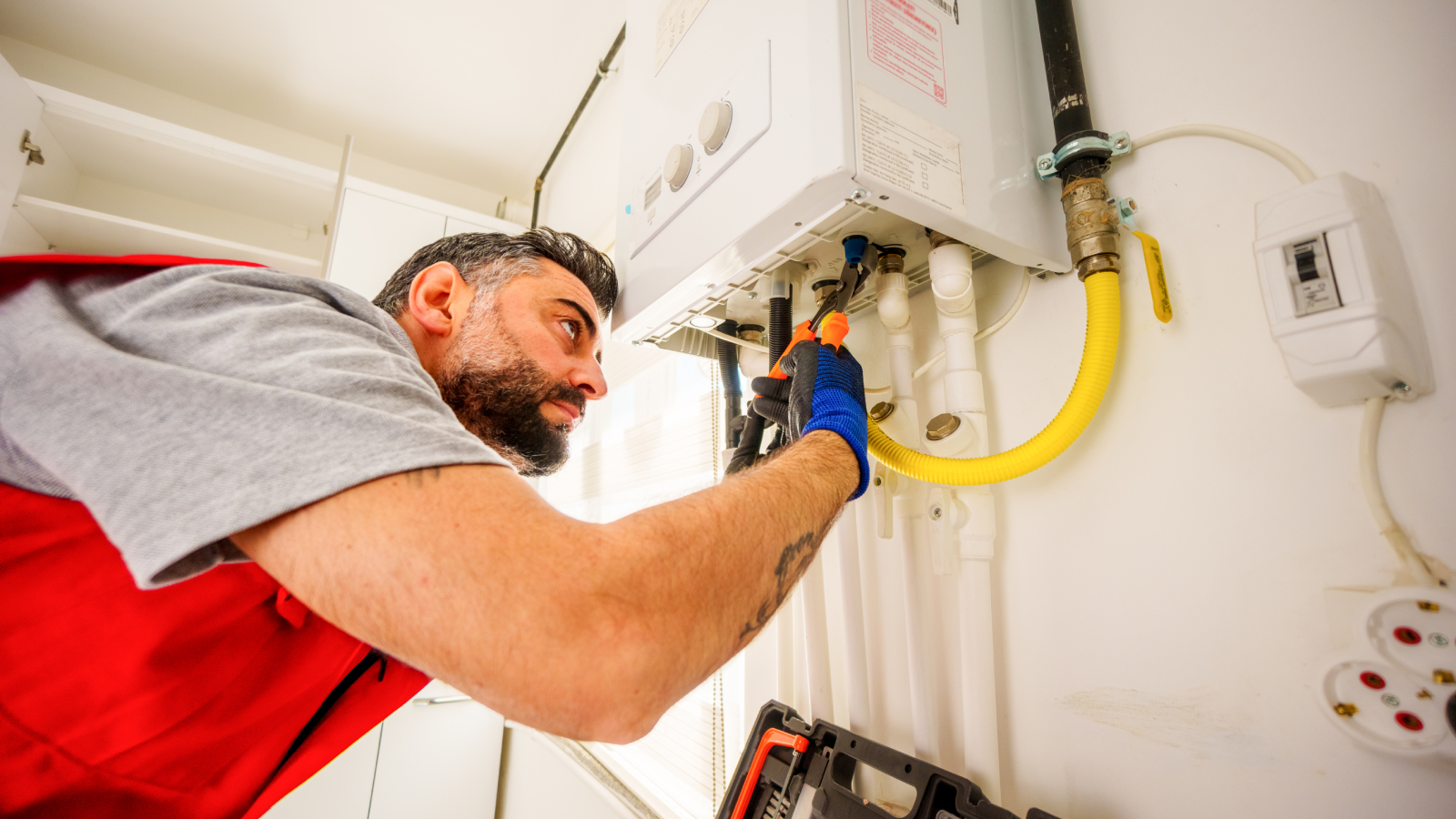
When a boiler fails to ignite, heating and hot water stop immediately. The ignition system is one of the more reliable parts of a modern boiler, but specific components do wear and fail — and knowing which ones and why helps you understand what a Gas Safe engineer will be looking for and what the repair is likely to involve.
The Ignition Sequence Explained
Understanding what happens when a modern boiler attempts to ignite helps make sense of why specific faults prevent it from doing so. Every ignition attempt follows the same sequence, and the boiler will lock out if any step fails to complete correctly.
- Demand signal: The thermostat or programmer calls for heat. The boiler's printed circuit board (PCB) receives the demand signal and initiates the ignition sequence.
- Fan pre-purge: The flue fan starts and runs for a set period — typically ten to twenty seconds — before ignition. This pre-purge clears any residual gas from the combustion chamber and flue, preventing an explosive ignition attempt.
- Gas valve opens: The PCB sends a signal to the gas valve to open and admit gas to the burner. The gas valve is an electromechanical component — a solenoid coil opens a valve gate when energised. If the valve does not receive the correct signal from the PCB, or if the valve's coil has failed, the valve remains closed and no gas reaches the burner.
- Spark electrode fires: Simultaneously with the gas valve opening, the ignition transformer generates a high-voltage spark at the spark electrode — a ceramic-insulated rod positioned immediately adjacent to the burner. The spark ignites the gas as it emerges from the burner.
- Flame sensor confirms ignition: Once the burner lights, the flame sensor (also called the flame probe or ionisation sensor) detects the presence of the flame by measuring the small electrical current conducted through an established flame. If the flame sensor does not confirm ignition within a few seconds — because there is no flame, or because the sensor is dirty or faulty — the PCB closes the gas valve and locks out the boiler.
A lockout code on the display indicates at which stage the sequence failed. This is why manufacturer-specific error codes are the first diagnostic step for any ignition failure.
Common Ignition Failures
Worn or Cracked Spark Electrode
The spark electrode is an expendable component. Over years of firing, the electrode tip erodes from the repeated high-voltage sparking — a new electrode has a clean, sharp tip; a worn one becomes rounded and less effective at producing a consistent spark. Additionally, the ceramic insulation surrounding the electrode body can develop hairline cracks over time. A cracked electrode body allows the high-voltage spark to track along the crack to earth rather than jumping the air gap to the burner — no spark at the burner, no ignition.
Signs of a worn electrode include: audible clicking from the boiler during ignition attempts without a flame being established, or intermittent ignition (sometimes lights, sometimes does not).
Faulty Ignition Lead
The ignition lead connects the ignition transformer to the spark electrode, carrying the high-voltage pulse. These leads develop internal resistance through repeated thermal cycling and can develop insulation cracks. A deteriorating ignition lead dissipates the spark energy before it reaches the electrode. This produces the same symptom as a worn electrode — clicking without ignition — but is less immediately obvious to diagnose. Engineers typically replace both electrode and lead together when servicing an ignition fault.
Dirty Flame Sensor
The flame sensor is a simple device — a metal rod that detects flame by conducting a micro-ampere current through an established flame to earth. The problem arises because the rod is exposed to combustion gases and accumulates a thin film of oxide or soot over time. This film insulates the rod and prevents the flame current from flowing — the PCB does not detect the flame, even though it is burning normally, and locks out the boiler.
A dirty flame sensor is one of the most common and cheapest causes of intermittent boiler lockout. The sensor can usually be removed and cleaned with fine wire wool or an emery cloth — it is a routine part of a boiler service. A cleaned sensor typically resolves the fault immediately.
Gas Valve Not Opening
The gas valve is an electrically operated solenoid valve that controls gas flow to the burner. Valve failures can be electrical (the solenoid coil burns out, preventing the valve from opening) or mechanical (the valve body sticks closed due to debris or corrosion). A failed gas valve means no gas reaches the burner regardless of the spark's effectiveness. Gas valve replacement is typically required — these components are not field-repairable. Cost for a gas valve varies by manufacturer and model: typically £150–£300 for parts and labour.
Low Gas Pressure
All gas appliances require minimum inlet and working pressures to operate. If the gas pressure at the boiler is below specification — due to a fault with the meter regulator, a partially closed meter isolation valve, a problem with the gas network in your street, or high demand from multiple appliances — the gas valve may open but insufficient gas reaches the burner for stable ignition. Engineers check gas inlet and working pressure with a manometer as one of the first steps in ignition fault diagnosis.
Ignition Failure Error Codes by Brand
The following are the primary ignition failure codes for the three most common boiler brands in London:
- Vaillant ecoTEC: F.28 — ignition failure (gas valve opened but no flame detected within the safety period). Also F.29 — flame signal detected but gas valve commanded closed (flame sensor fault or ghost flame).
- Worcester Bosch Greenstar: EA (also displayed as EA 227) — ignition failure lockout. The display shows E9 on some older models for related ignition faults.
- Baxi: E1 — ignition failure. Some Baxi models use E119 for no gas or ignition failure depending on model variant.
These codes are the starting point for an engineer's diagnosis, not a precise identification of which component has failed — they indicate the ignition sequence did not complete successfully, but multiple component failures can produce the same code.
DIY Checks Before Calling an Engineer
There are a small number of checks a homeowner can safely carry out before calling a Gas Safe engineer:
- Check whether the gas supply is working: Turn on a gas hob or gas cooker. If the hob ignites normally and burns steadily, the gas supply to the property is functioning and the boiler's ignition failure is an appliance fault rather than a supply problem. If the hob also fails to light, there may be a gas supply issue — check whether other gas appliances in the property work and contact your gas supplier if none do.
- Check the boiler pressure: Most ignition faults are unrelated to pressure, but a boiler with pressure below 0.5 bar may fail to attempt ignition at all due to a low-pressure safety lockout. Check the pressure gauge on the boiler — it should read between 1.0 and 1.5 bar. If below this, repressurise following the manufacturer's instructions before attempting reset.
- Reset the boiler once: If the boiler has locked out with an ignition failure code, reset it once using the reset button (typically held for three to five seconds). A single successful reset after a one-off lockout may indicate a temporary ignition glitch. If the boiler locks out again on the same code, do not keep resetting — it indicates a persistent fault requiring diagnosis.
Do not attempt to access or adjust any gas components, the spark electrode, or any internal boiler components yourself. All gas work requires a Gas Safe registered engineer.
What a Gas Safe Engineer Will Do
When a Gas Safe engineer attends an ignition fault, the diagnostic process typically covers:
- Read and note the lockout code and boiler fault history if the PCB retains fault logs
- Check gas inlet pressure and working pressure with a manometer
- Inspect the spark electrode — visual check for wear, cracks, correct gap from burner
- Check the ignition lead continuity and insulation integrity
- Remove and inspect the flame sensor — clean if oxidised, test with a meter if unclear
- Test PCB output voltage to the gas valve during an ignition attempt
- Replace the identified failed component — electrode, lead, flame sensor, or gas valve
- Commission and test the boiler through several ignition cycles to confirm the repair
Typical Cost
For a standard ignition fault repair — electrode replacement, flame sensor clean, or ignition lead replacement — the typical cost in London is £150–£250 including parts and labour for a Gas Safe engineer's visit. Gas valve replacement is at the upper end or slightly above this range depending on the boiler model and part cost. If the fault has caused PCB damage (for example, from a persistent short circuit on the ignition lead), costs increase significantly — PCB replacement is typically £300–£500 including parts and labour.
Frequently asked questions
Why does my boiler click but not ignite?
Clicking without ignition indicates the spark electrode is attempting to fire but no flame is being established. The most common causes are a worn or cracked spark electrode (the tip erodes over time, reducing spark effectiveness), a faulty ignition lead (which dissipates spark energy before it reaches the electrode), insufficient gas reaching the burner (check whether your gas hob works normally), or a dirty flame sensor preventing confirmation of ignition. A Gas Safe engineer will inspect the electrode, lead, flame sensor, and gas pressure to identify the specific cause.
What does Vaillant error code F.28 mean?
Vaillant F.28 indicates an ignition failure lockout — the gas valve opened and an ignition attempt was made, but no flame was detected by the flame sensor within the safety time period. Common causes include a worn spark electrode, dirty or failed flame sensor, faulty ignition lead, gas valve not opening correctly, or low gas pressure. Try resetting the boiler once. If it locks out again on F.28, a Gas Safe engineer is needed to diagnose which specific component has failed. Do not reset repeatedly.
Can I fix a boiler ignition fault myself?
No — boiler ignition components are part of the gas system and all gas work must be carried out by a Gas Safe registered engineer. You can safely check whether your gas supply is working (does the hob light?), check the boiler pressure gauge (should be 1.0–1.5 bar), and attempt a single reset if the boiler has locked out. Beyond these checks, diagnosing and replacing ignition components — spark electrode, flame sensor, ignition lead, gas valve — requires Gas Safe registration. Working on gas appliances without registration is a criminal offence.
How much does it cost to fix a boiler that won't ignite?
The typical cost for an ignition fault repair in London is £150–£250, covering a Gas Safe engineer's diagnostic visit, the failed component (spark electrode, flame sensor, or ignition lead), and labour. Gas valve replacement costs more — typically £250–£400 depending on the boiler model and part cost. If the fault has caused PCB damage, costs increase to £300–£500 for PCB replacement. Getting the boiler serviced annually reduces the likelihood of ignition faults developing by keeping the electrode and flame sensor in good condition.