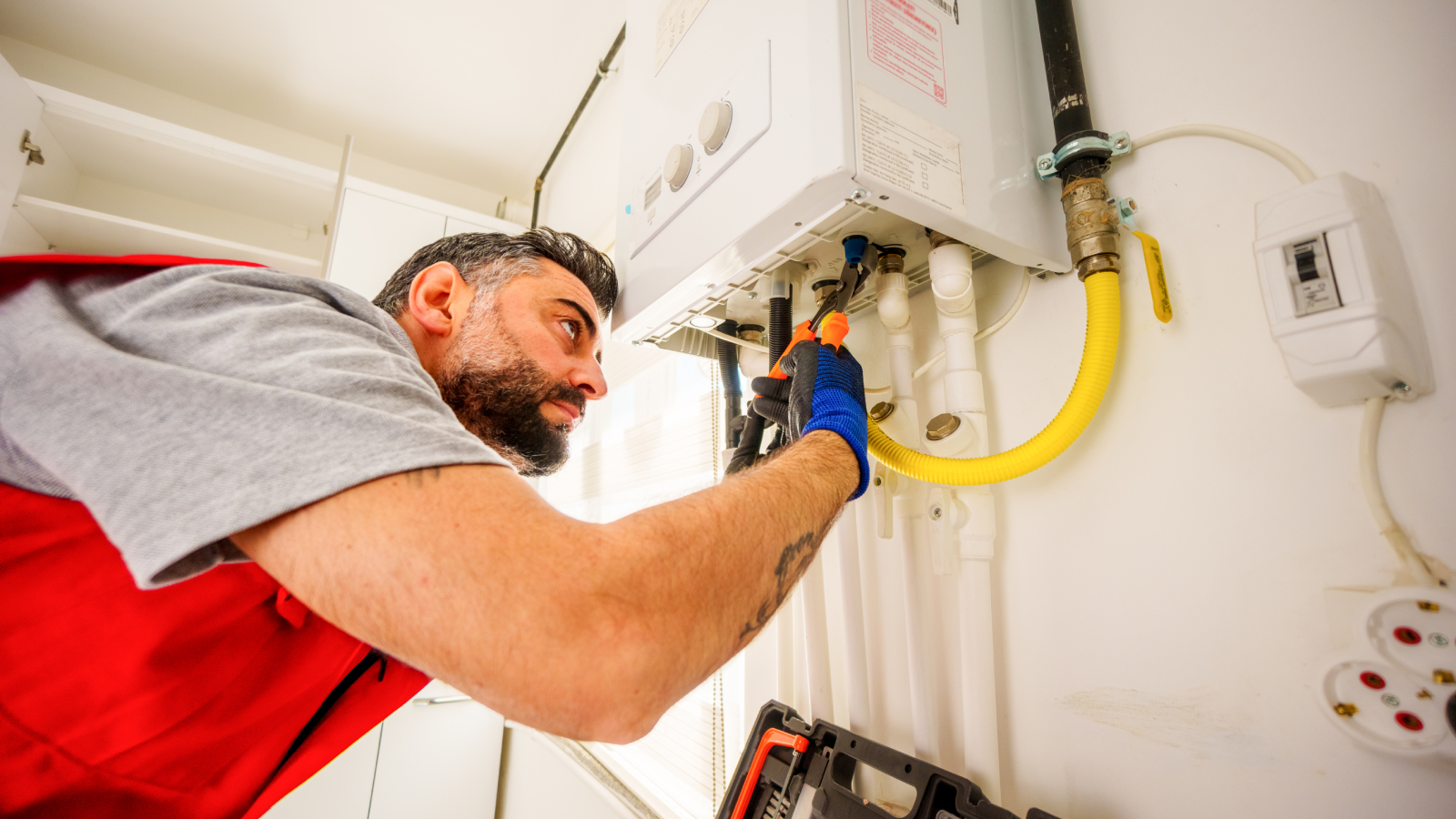
Modern gas boilers in London homes display error codes when they lock out, but the codes vary by manufacturer and the same underlying fault can produce different codes on different boiler models. This guide covers the most common fault categories — low pressure, ignition failure, flame loss, fan errors and thermistor faults — explains what each means and distinguishes the ones you can safely investigate yourself from those that require a Gas Safe engineer.
When a modern combi or system boiler locks out, the control panel displays a fault code, a flashing LED pattern, or both. These codes are diagnostic tools — not random error messages — and understanding the most common ones will help you determine whether the fault is something straightforward (like low boiler pressure) or something that requires a Gas Safe registered engineer to investigate.
Important Note on Gas Work
Any investigation or repair involving gas connections, flue components, burner assemblies or heat exchanger components must be carried out by a Gas Safe registered engineer. This is a legal requirement under the Gas Safety (Installation and Use) Regulations 1998 and is non-negotiable for safety reasons. The fault codes below that can be addressed by the homeowner or tenant are limited to pressure topping-up and resetting after a lockout where the cause has been identified and corrected.
Low Pressure / E119, F22, EA 338 (Vaillant, Worcester Bosch, Ideal)
Low pressure is the most common cause of boiler lockout across all major brands. Most combi and system boilers require a system pressure of 1.0 to 1.5 bar (visible on the pressure gauge on the front panel) to operate. If the pressure falls below approximately 0.8 bar, the boiler will lock out and display a low pressure fault.
What to check: Look at the pressure gauge. If it reads below 1.0 bar, the system needs to be topped up via the filling loop — the flexible braided hose (sometimes under the boiler, sometimes in an adjacent airing cupboard) connected between the cold mains supply and the central heating circuit.
Self-fix: Open both valves on the filling loop slowly until the gauge reads 1.2–1.5 bar, then close both valves. Press the reset button on the boiler. If pressure builds to the correct level and the boiler fires, the immediate issue is resolved.
When to call an engineer: If the boiler loses pressure repeatedly (needing topping up more than once every few months), there is a leak somewhere in the system — either at a radiator valve, at a towel rail connection, or at the pressure relief valve discharge. An engineer should trace and repair the leak rather than continuing to top up the pressure indefinitely.
Ignition Failure / E2, F28, EA 227
An ignition fault means the boiler attempted to light the burner but failed to ignite or failed to confirm ignition. This can be caused by:
- Gas supply interruption (check whether neighbours have gas, or check whether other gas appliances in the property work)
- Spark electrode or detection electrode contaminated by condensate or debris
- Gas valve fault
- Flue or ventilation blockage preventing safe ignition
Self-fix: If the gas supply is confirmed working, a single reset may clear a transient ignition failure. If the fault recurs after reset, do not continue resetting — call a Gas Safe engineer, as repeated failed ignition attempts can result in an unburned gas build-up.
Fan Fault / F3, EA 338 Fan, L6
Modern boilers use a fan to remove combustion gases through the flue before and during firing. A fan fault indicates the fan is not running at the correct speed — either the fan has failed, the fan motor has seized, or the flue is blocked. The boiler will not attempt to fire until the fan is confirmed as running at the correct speed.
Self-fix: None. A fan fault requires an engineer. Do not reset the boiler multiple times, as this risks unburned gas accumulation if the ignition sequence proceeds without correct flue clearance.
Thermistor / Sensor Fault / F1, EA 238, F83
Thermistors are temperature sensors — one on the flow pipe leaving the heat exchanger and one on the return pipe. A thermistor fault means the boiler cannot verify that the heat exchanger is at the correct temperature, which prevents safe operation. This may indicate a failed sensor (relatively common and inexpensive to replace) or a real temperature anomaly caused by limescale, pump failure or a flow restriction.
Self-fix: None. A Gas Safe engineer should diagnose whether the sensor itself has failed or whether there is an underlying heat exchanger issue.
Condensate Blockage / EA 338 Condensate, F28 (in winter)
In modern condensing boilers, combustion produces acidic condensate that is drained away via a small plastic pipe that typically exits through an external wall or into a drain. In cold weather, this condensate pipe can freeze. When it freezes, condensate backs up into the boiler and triggers a lockout — most commonly presenting as an ignition fault (F28 on Worcester Bosch is a well-known example of a condensate blockage fault in London winters).
Self-fix: In an accessible location, pouring warm (not boiling) water over the external section of the condensate pipe typically thaws the blockage in a few minutes. Once the pipe is clear, reset the boiler. After the heating season, consider lagging the external condensate pipe to prevent recurrence.
Overheat / F9, EA 217, F75
An overheat fault indicates the heat exchanger has exceeded safe temperature limits. Causes include a blocked heat exchanger (limescale or sludge), a faulty pump not circulating water adequately, or a zone valve stuck in a closed position. This fault should not be reset without identifying the underlying cause — repeated overheating will damage the heat exchanger.
Self-fix: None. Call a Gas Safe engineer.
Reading Your Boiler's Specific Code
Fault code numbering varies by manufacturer. The codes above reference the most common models in London (Worcester Bosch, Vaillant, Ideal and Baxi, which collectively account for a large share of London's installed base). For your specific model, the boiler manual — available as a PDF from the manufacturer's website if the original has been lost — will list fault codes with descriptions. The manufacturer's helpline (available on the front of the boiler or on their website) can also advise on specific fault codes over the telephone before an engineer is instructed.
Frequently asked questions
Can I reset my boiler myself after it shows an error code?
For low pressure faults, you can top up the system pressure via the filling loop and then reset. For other fault codes, a single reset is generally safe to attempt, but if the fault recurs after reset, do not continue resetting. Repeated resets on ignition or fan faults without resolving the underlying cause can create safety risks.
Why does my London boiler keep losing pressure?
A boiler that repeatedly loses pressure has a leak somewhere in the central heating circuit — at a radiator valve, a towel rail connection, the pressure relief valve, or at a joint in the pipework. London's older properties with original pipework or older radiator valves are particularly susceptible. An engineer can carry out a leak detection and trace the source. Continuing to top up without fixing the leak accelerates corrosion and risks premature boiler failure.
What should I do if my boiler shows an F28 or ignition fault code in winter?
In winter, an F28 or similar ignition code on a condensing boiler is frequently caused by a frozen condensate pipe rather than a true ignition failure. Locate the condensate pipe (a white or grey plastic pipe exiting through an external wall), pour warm water over the external section to thaw it, then reset the boiler. If the fault persists after the pipe is clear, call a Gas Safe engineer.
Is a boiler error code covered under my boiler warranty?
This depends on the cause. Manufacturer defects in components such as the gas valve, fan motor or PCB are typically covered under warranty (usually 2 to 10 years depending on the brand and whether annual servicing has been maintained). Faults caused by limescale from London's hard water, system sludge, or incorrect installation are generally excluded from warranty cover.