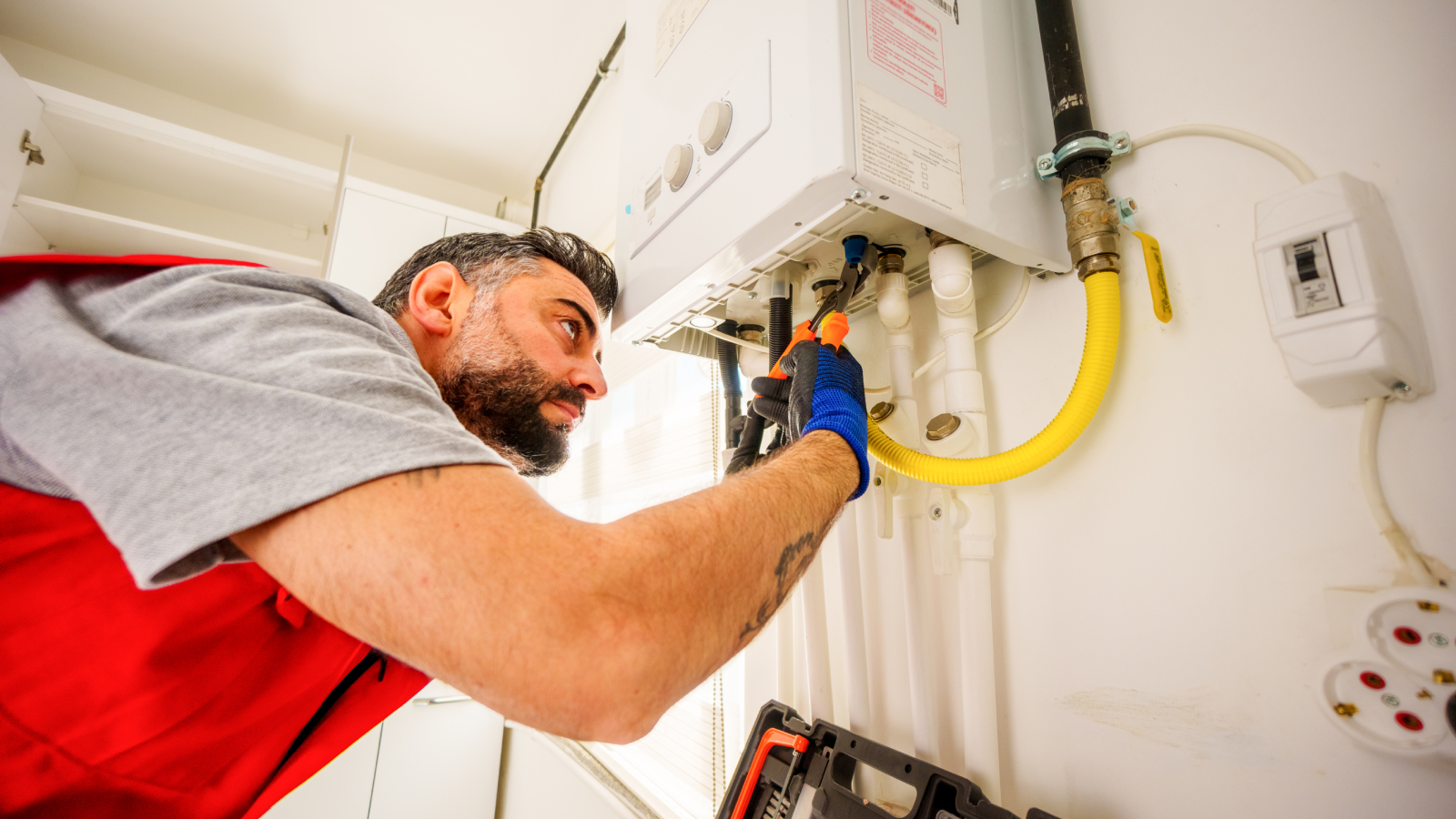
London boilers are under their greatest strain from November through February, and the same faults account for the majority of callouts every year. Understanding why breakdowns happen — and the specific vulnerabilities of older London housing stock — lets you act before you lose heat entirely. This guide covers the most common causes and what landlords and homeowners can do about each one.
Every winter, Gas Safe engineers across London respond to thousands of boiler breakdowns that were, in many cases, preventable. The demand spike from October onward places enormous strain on systems that may have sat largely idle through summer. For landlords with tenanted properties and homeowners in older stock, the consequences of a boiler failure go beyond discomfort — they trigger repair obligations, potential loss of habitability, and in rented properties, legal exposure under the Homes (Fitness for Human Habitation) Act 2018.
The faults that cause the majority of winter breakdowns are well understood. Here is what to look for, why London properties are particularly susceptible, and what a Gas Safe registered engineer will do to address each issue.
Frozen Condensate Pipes
Modern condensing boilers — which have been the standard in new installations since the 2005 Building Regulations update — produce acidic condensate water as a byproduct of their efficiency. This condensate drains away through a plastic pipe, often routed externally or through an unheated space such as a garage or utility room.
When temperatures drop below zero, that external section freezes. The boiler detects a blockage, locks out, and displays a fault code. In London, where overnight temperatures regularly hit -2°C to -4°C in January and February, this is one of the most common callout reasons of the season.
The immediate fix — carefully pouring warm (not boiling) water over the frozen section and resetting the boiler — is something most homeowners can do safely. The longer-term solution is to have the condensate pipe insulated or re-routed internally by a qualified engineer during a service visit before winter begins.
Low Boiler Pressure
Combination boilers operate correctly within a pressure range of approximately 1 to 1.5 bar when cold. Over summer, slow leaks, bleeding of radiators, or simple pressure loss can bring this below 0.5 bar — low enough for the boiler to lock out as a safety measure when it first runs under heavy demand in autumn.
Many homeowners can re-pressurise the system themselves using the filling loop and following the boiler manufacturer's instructions, then resetting the unit. However, if pressure loss recurs within weeks, there is an underlying leak that requires investigation. Persistent pressure loss in Victorian and Edwardian terraces — which make up a substantial proportion of London's housing stock — is often traced to original pipework joints, corroded radiator valves, or failing pump seals.
Airlocks in the System
Air trapped within the central heating circuit prevents hot water from circulating freely. The result is cold spots — typically at the top of radiators — and in more severe cases, the pump working against resistance until it overheats and fails. Airlocks are more common in systems that have been drained and refilled, or where inhibitor levels have dropped and corrosion has generated hydrogen gas within the pipework.
Bleeding radiators is the first step, starting from the ground floor and working upward. If bleeding does not resolve the issue, a system flush and the addition of a corrosion inhibitor such as Fernox F1 may be required. Properties with older steel radiators or galvanised pipework — again, common in pre-1960s London housing — accumulate sludge that restricts flow and accelerates pump wear.
Ignition and Pilot Light Failures
Gas boilers rely on an ignition electrode and flame sensor to start and sustain combustion safely. These components wear over time, and a boiler that fires intermittently, locks out with an ignition fault code, or makes a clicking sound without lighting is typically showing electrode degradation or a faulty gas valve.
This is not a repair for the homeowner. Any work on the gas components of a boiler must be carried out by an engineer on the Gas Safe Register. Landlords are additionally required under the Gas Safety (Installation and Use) Regulations 1998 to hold a current Gas Safety Certificate — renewed annually — for each rented property. An ignition failure that has gone unaddressed may also indicate that the boiler has not been serviced recently, which can void manufacturer warranties and complicate insurance claims.
Thermostat and Programmer Faults
Not every winter heating failure originates with the boiler itself. A faulty room thermostat, a programmer that has lost its settings after a power cut, or a wireless receiver that has lost its pairing will prevent the boiler from receiving a heat demand signal. The boiler appears to be functioning — it fires for hot water — but central heating does not come on as scheduled.
Check programmer settings and thermostat batteries before calling an engineer. If the controls appear correct and the issue persists, a wiring fault or failed motorised valve is likely, both of which require a qualified heating engineer to diagnose.
The Case for Annual Servicing
The majority of the faults listed above are identifiable during a routine annual boiler service. An engineer will check electrode condition, heat exchanger integrity, condensate drainage, system pressure and inhibitor levels, and test the safety controls — all before the heating season begins. For landlords, annual servicing is not optional; it forms part of the Gas Safety Record obligation and provides documented evidence that duty of care has been met.
Booking a service in September or October, before demand peaks, also means shorter waiting times and the opportunity to order parts before they become scarce in December. If your boiler has not been serviced in the last twelve months, that is the single most effective step you can take before winter arrives.
Frequently asked questions
Can I thaw a frozen condensate pipe myself, or do I need a Gas Safe engineer?
You can safely thaw a frozen condensate pipe yourself by pouring warm water — not boiling — over the frozen external section, then resetting the boiler. However, if the pipe freezes repeatedly, an engineer should re-route or insulate it properly, as this is a recurring fault in many London properties with externally run condensate drainage.
How often must a landlord in London renew their boiler's Gas Safety Certificate?
Under the Gas Safety (Installation and Use) Regulations 1998, landlords must arrange an annual gas safety check carried out by a Gas Safe registered engineer and provide tenants with a copy of the resulting Gas Safety Record (CP12) within 28 days of the check, or before a new tenancy begins. Failure to comply is a criminal offence.
My boiler pressure keeps dropping every few weeks — is that normal?
No. A small drop in pressure over several months can be normal, but if you are re-pressurising the system every two to four weeks, there is an active leak somewhere in the circuit — at a radiator valve, pipework joint, or the boiler itself. A Gas Safe engineer should carry out a pressure test to identify and repair the source.
What fault codes indicate an ignition failure on a combi boiler?
Fault codes vary by manufacturer — common examples include EA on Ideal boilers, E3 on Vaillant, and F.28 or F.29 on Viessmann units — but all indicate a failure to ignite or sustain a flame. Any boiler displaying an ignition fault code should be inspected by a Gas Safe registered engineer before repeated reset attempts, as persistent relighting failures can indicate a gas supply or valve issue.