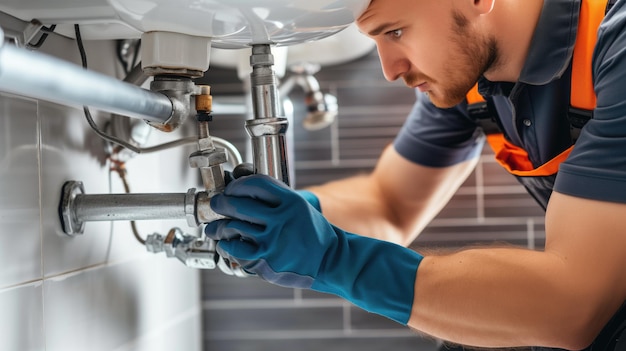
A shower that drains slowly or refuses to drain at all is one of the most common household plumbing issues in London — and one of the most preventable. Understanding what blocks shower drains, what you can fix yourself, and when a plumber is actually needed prevents wasted time and avoidable call-out costs.
Why Shower Drains Block
The primary cause of shower drain blockage in London homes is hair. Every shower produces loose hair — the average person loses 50–100 hairs daily in normal conditions, and a significant proportion of these are lost during washing. Hair washed down the shower drain does not dissolve or break down in the way that soap or organic residue does. It accumulates in the drain fitting, in the P-trap immediately below, and in the waste pipe behind the wall, where it forms an increasingly dense mat that progressively restricts water flow.
Several factors accelerate the problem in London specifically:
- Soap scum: Shower gel, shampoo, conditioner, and body wash residue combine with hair to create a sticky, semi-solid binding matrix in the drain. The soap scum holds hair in place and binds additional debris into a more solid blockage than hair alone would form.
- London hard water scale: London's very hard water (200–400 mg/l calcium carbonate) deposits limescale on the inside of drain fittings and waste pipes over time. This scale roughens the pipe surface, creating a better surface for hair and soap to adhere to, and progressively reduces the pipe's effective bore.
- Shower gel and shampoo residue: High-lather products leave more residue in the drain than low-lather alternatives. Residue that is not fully flushed away provides a base layer for subsequent hair and debris to bind to.
The result is a slow build-up rather than a sudden blockage — a shower that once drained freely becomes progressively slower over weeks or months before the drain finally becomes fully or mostly blocked.
DIY Fixes
Manual Removal
The most effective DIY fix for a shower drain blocked by hair is also the most straightforward: remove it manually. This works for blockages at the drain fitting or in the P-trap directly below.
- Remove the drain cover. Most modern shower drain covers either unscrew (one central screw) or clip off. Remove and set aside.
- Using gloved hands or long-nosed pliers, reach into the drain fitting and pull out any visible hair accumulation. The hair is typically wrapped around the central post of the drain fitting and around the drain basket. It is unpleasant but effective.
- Once the visible hair is removed, pour hot water (not boiling — hot from the tap is sufficient) to flush any residue through.
- Replace the drain cover and run the shower to test drainage.
This approach works for most routine hair blockages. If the drain is still slow after clearing the fitting, the blockage may be deeper in the trap or waste pipe.
Drain Snake
A drain snake (also called a drain auger or plumber's snake) is a coiled metal cable, typically 3–5 metres long, that is fed into the drain to reach and physically break up or retrieve blockages deeper than the drain fitting. Consumer-grade drain snakes are available from DIY stores for £15–£30.
Remove the drain cover, feed the snake into the drain, and rotate the handle as you push it forward. When the snake meets resistance, the blockage has been located — continue rotating to break up and retrieve the hair mass. Draw the snake back slowly, collecting the retrieved debris. Flush with hot water to clear any remnants.
A drain snake is appropriate for blockages in the P-trap and the first metre or two of waste pipe. For blockages deeper in the waste system, or in the main stack connection, it may not reach.
Baking Soda and Vinegar
For mild build-up in the drain — not a full blockage, but a drain that has become slow over time — a baking soda and vinegar treatment can break down soap scum and organic residue in the drain. Pour half a cup of baking soda into the drain, followed by half a cup of white vinegar. The fizzing reaction dislodges soft deposits. Wait fifteen to twenty minutes, then flush with a kettle of hot (not boiling) water.
This approach is effective for maintaining a clean drain and clearing early-stage build-up, but it will not clear a physical hair blockage — baking soda and vinegar dissolve the binding matrix (soap scum and organic residue) but do not dissolve hair. For a hair blockage, manual removal is required.
What About Chemical Drain Cleaners?
Chemical drain cleaning products (caustic soda, enzyme-based cleaners) dissolve organic material and soap residue. They can be effective for mild blockages where soap scum and organic build-up is the primary cause. Their limitations are:
- They do not dissolve hair — they soften the binding matrix around the hair but leave the hair intact. Once the chemical has softened the build-up, manual removal of the hair is still required.
- Caustic soda products can damage some plastic and chrome drain fittings, and are hazardous if splashed. Follow manufacturer instructions carefully.
- Regular chemical use is not a substitute for physical cleaning — it reduces the effectiveness of the P-trap water seal if overused.
Prevention: The Most Effective Approach
The most cost-effective solution for shower drain blockage is prevention. A drain hair catcher — a simple mesh or silicone insert that sits in or over the drain opening and catches hair before it enters the drain — is available for £5–£15 and prevents the vast majority of hair entering the waste system. Checking and clearing the hair catcher after every shower takes under thirty seconds and eliminates the need for periodic drain clearing.
London properties with multiple occupants, particularly those with long-haired residents, will find a hair catcher eliminates shower drain blockage almost entirely. This is the single most useful plumbing maintenance action for shower drains.
When to Call a Plumber
Call a plumber when:
- Multiple drains are slow simultaneously: If the shower, bath, and washbasin are all draining slowly, or if the shower is slow and there is gurgling from adjacent drains, the blockage is in the main waste pipe or the connection to the soil stack — not in the individual shower drain. This requires high-pressure jetting equipment or access to the main waste pipe, neither of which is a DIY job.
- DIY methods have failed: If manual removal and a drain snake have not resolved the blockage, the obstruction is deeper than accessible by these methods.
- There is a smell of sewage: A persistent sewage smell from the shower drain may indicate a dry P-trap (the water seal has evaporated from an unused drain — pour water in to restore the seal) or a more serious issue with the drain configuration or a cracked pipe. If pouring water into the drain does not resolve the smell, a plumber should investigate.
- Drain CCTV is needed: For recurring blockages in the same location, a CCTV drain survey identifies whether there is a structural issue — root ingress, a collapsed section, or a misaligned joint — causing repeated blockage. This requires specialist equipment.
What a Plumber Does for a Shower Drain Blockage
For a blockage that requires professional attention, the standard approach is:
- High-pressure water jetting: A jetting machine delivers a high-pressure water flow through the waste pipe, dislodging blockages and cleaning the pipe walls of scale and grease deposits. This is effective for blockages that cannot be reached or cleared by manual methods.
- CCTV survey: For recurring or unexplained blockages, a small camera is fed through the waste pipe to identify the cause and exact location of the obstruction.
- Access fitting or cleanout: Where repeated blockages occur at the same point, a plumber may install an access fitting (cleanout) in the waste pipe to allow future maintenance without disassembly.
For a straightforward blockage beyond the shower's immediate waste fittings, expect a plumber's visit to cost £80–£150 for jetting with standard access. CCTV surveys add £150–£300 depending on the survey scope.
Frequently asked questions
Why does my shower drain keep blocking even after I clear it?
Recurring shower drain blockage usually means hair is continually entering the drain without a catcher to intercept it. Fit a drain hair catcher — a mesh or silicone insert that sits in or over the drain — and clear it after every shower. If blockage persists with a catcher in place, the problem may be deeper: limescale build-up on pipe walls narrowing the bore, or a partial blockage in the main waste pipe. For a drain that blocks repeatedly despite a catcher and regular clearing, a plumber with jetting equipment can clear the full waste pipe run.
Can I use drain unblocker chemicals on a shower drain?
Chemical drain cleaners can help dissolve soap scum and organic residue that contribute to shower drain blockage, but they do not dissolve hair — they soften the binding matrix around the hair, but the hair itself must still be manually removed. For a full hair blockage, manual extraction with gloves or a drain snake is required first. Chemical cleaners are more useful for maintaining a slow drain before a full blockage forms, or for clearing residue after manual hair removal. Follow manufacturer instructions carefully — caustic products can damage some drain fittings.
My shower and bath are both draining slowly — is that one blockage?
If multiple fixtures are draining slowly simultaneously — shower, bath, and basin all affected, or with gurgling in one fixture when another drains — the blockage is in the shared waste pipe or its connection to the soil stack, not in the individual shower drain. This is beyond DIY drain snake range and requires a plumber with high-pressure jetting equipment to clear the main waste pipe. Individual drain clearing in this scenario will not solve the problem. Call a plumber.
How much does it cost to unblock a shower drain in London?
A plumber with high-pressure jetting equipment clearing a shower drain blockage in a London property typically costs £80–£150 for a straightforward access and jetting job. For blockages in the main waste pipe requiring longer jetting runs or access fitting removal, the cost may be higher. CCTV drain surveys for persistent or unexplained blockages add £150–£300. Prevention — a hair catcher fitted in the drain at £5–£15 and cleared after each shower — eliminates most shower drain calls entirely.