Most London drain blockages start as minor inconveniences and become serious problems when ignored. Here is how to identify whether you can fix it yourself and when a drainage engineer is the right call.
Blocked drains are one of the most common plumbing problems in London properties. They range from a slow-draining kitchen sink caused by grease build-up to a collapsed sewer section causing sewage backing up into the property. Getting the approach right — knowing when to try a DIY fix and when to call a professional — saves both time and money.
DIY fixes that work for minor blockages
Plunger: For a blocked sink or toilet, a plunger is the first tool to reach for. Create a seal over the drain or toilet pan and push up and down firmly 10–15 times. This often dislodges surface blockages caused by hair, food debris or small objects.
Boiling water: For kitchen sink blockages caused by grease, pouring a full kettle of boiling water slowly down the drain can dissolve fat build-up. Repeat 2–3 times. Do not use boiling water on plastic waste pipes — very hot water (just off the boil) is sufficient.
Drain rods: For blocked external drain gullies, a set of drain rods can break up and push through surface blockages. Rods are available from DIY stores. Work in a clockwise direction to avoid unscrew the rod joints.
Biological drain cleaners: Enzyme-based drain cleaners break down organic matter and are safe for pipework and septic systems. They work slowly (overnight) but are effective for maintenance and minor build-up.
When DIY is not enough: signs you need a plumber
Call a drainage engineer when:
- Multiple drains in the property are blocked simultaneously — this indicates a main drain blockage downstream of all the outlets
- Sewage is backing up into the property — a health hazard requiring urgent professional clearance
- The blockage clears but returns within days — suggests a structural issue (root intrusion, collapsed pipe) rather than a surface blockage
- Gurgling sounds from multiple outlets simultaneously when one drain is used — indicates a blocked shared drain or vent stack
- Bad smells from drains that persist after clearing — may indicate a broken or misaligned pipe, not a blockage
What professional drain clearing involves
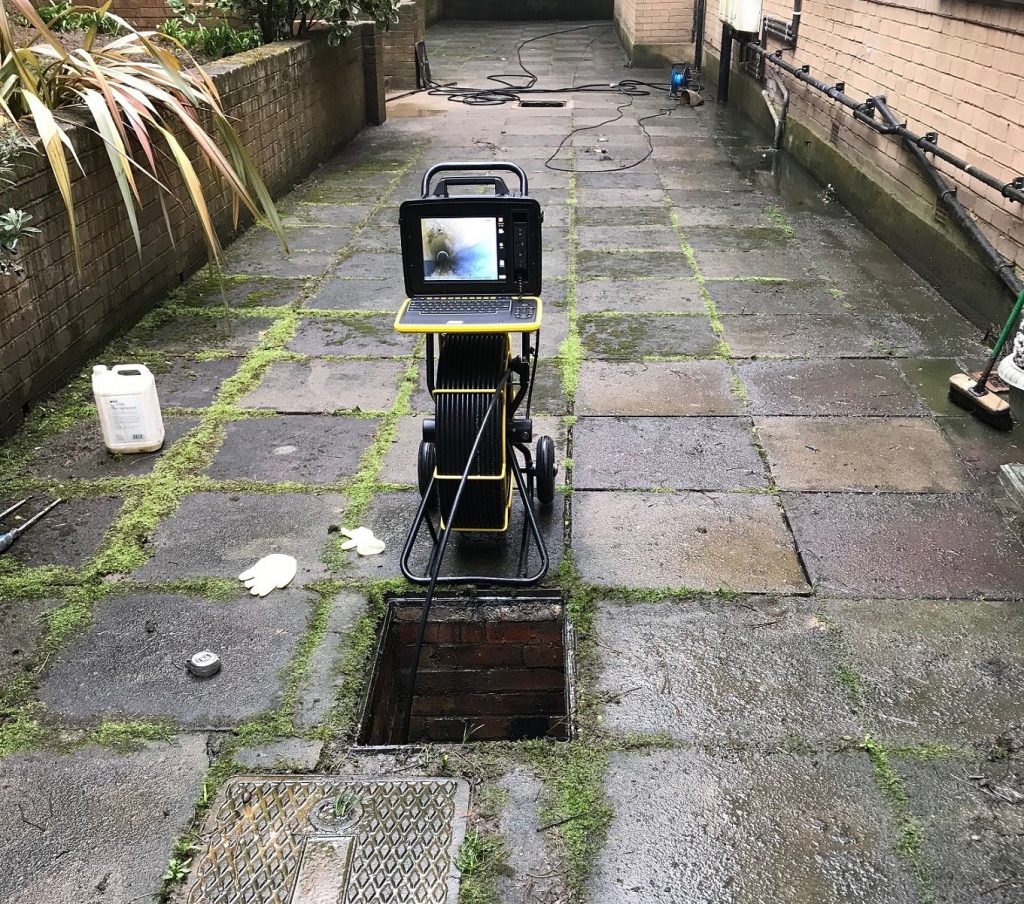
A drainage engineer will start with a visual inspection of accessible drain chambers before deciding on the best approach. For most surface blockages, high-pressure water jetting is used — far more effective than manual rodding for stubborn grease and scale build-up. For recurring blockages or suspected structural issues, a CCTV survey will be recommended before jetting, to identify the root cause.
Frequently asked questions
What is the best DIY product for a blocked kitchen sink?
A combination of a plunger and boiling water works well for grease blockages. Chemical drain unblockers are effective but harsh on pipework. Enzyme-based biological products are slower but safer for regular maintenance.
Are chemical drain cleaners safe to use?
Caustic soda and strong chemical cleaners are effective on organic blockages but can damage older pipework, particularly lead or plastic pipes, with repeated use. Use them sparingly and follow the instructions carefully.
Can tree roots block a drain?
Yes — tree roots are one of the most common causes of drain problems in older London properties. Roots enter through cracked joints in clay pipes and grow to fill the pipe. Jetting clears the blockage temporarily; relining or pipe replacement addresses the root cause.
Who pays for drain unblocking in a rented property?
Generally, the landlord is responsible for maintaining drains. However, if a blockage is caused by tenant misuse (e.g., flushing wipes), the cost may be recoverable from the tenant. Check your tenancy agreement.