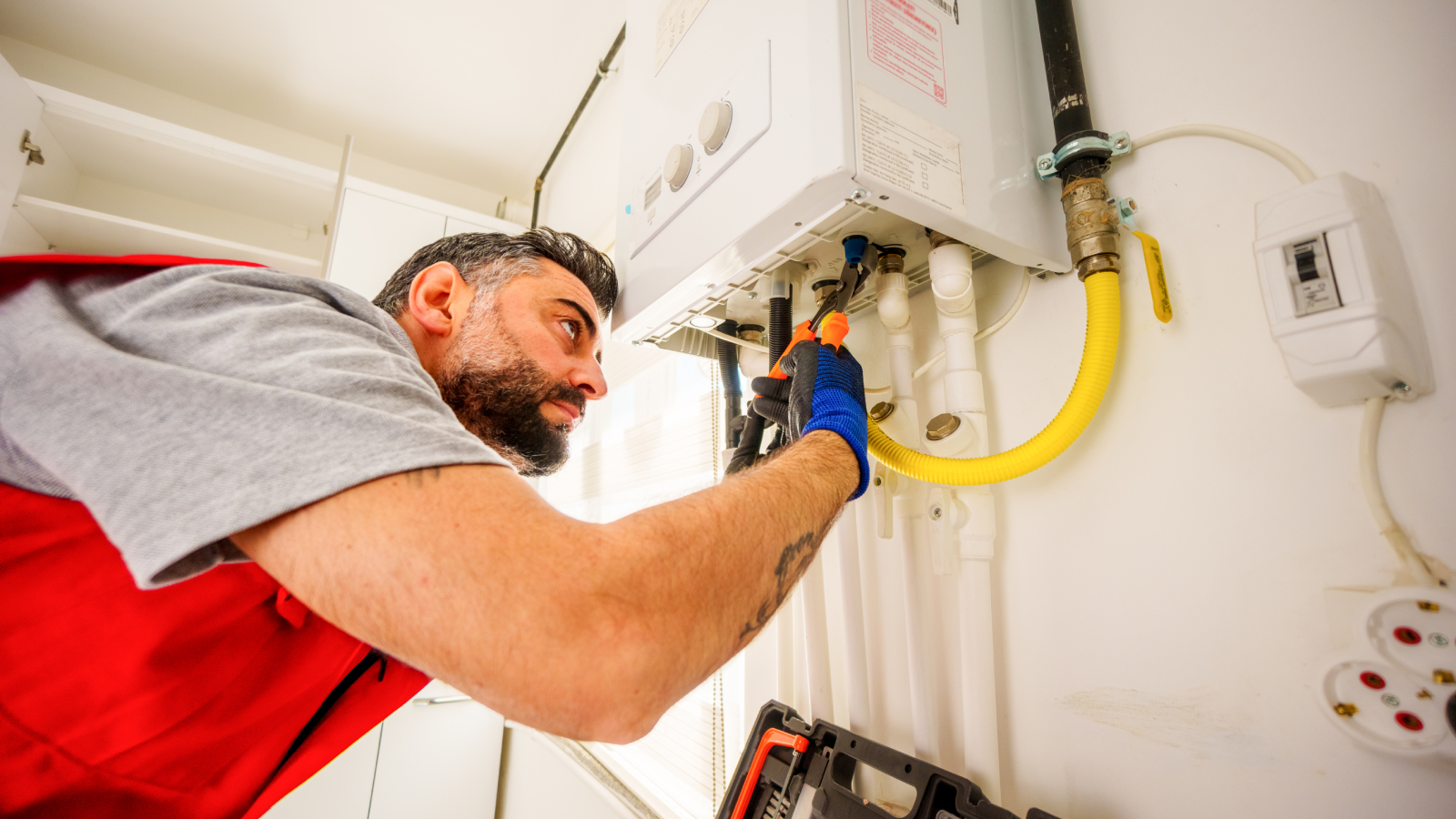
An annual boiler service is not just a warranty requirement — it is the most effective way to prevent breakdowns, detect early-stage faults, and maintain efficiency. This guide explains exactly what a Gas Safe engineer checks, cleans, and adjusts during a standard boiler service.
What Happens During a Boiler Service
A standard annual boiler service carried out by a Gas Safe registered engineer covers a structured inspection, analysis, cleaning, and adjustment process. The specific steps vary by boiler make and model, but the core elements are consistent across all modern combi and system boilers:
Visual Inspection
The engineer begins with a visual check of the boiler casing, flue terminal, gas supply, and condensate pipe. They look for signs of combustion staining (sooting on the case, which suggests a flue or combustion issue), corrosion at pipework connections, signs of previous leaks, and the condition of the flue outside the building. The flue terminal — the white plastic outlet on the external wall — is checked for obstruction, damage, or signs of back-draught.
Flue Gas Analysis
This is the most technically significant part of the service. The engineer uses a flue gas analyser — a calibrated instrument inserted into the flue — to measure the composition of combustion gases. Key readings are:
- CO/CO₂ ratio: The ratio of carbon monoxide to carbon dioxide in the flue gas. A ratio above 0.004 indicates incomplete combustion — a safety concern and a sign the burner needs adjustment.
- O₂ content: Indicates whether the air-to-gas ratio is correct. Too much oxygen means the boiler is running lean (inefficient); too little means rich combustion producing CO.
- Flue gas temperature: High exhaust temperatures indicate scale on the heat exchanger — the boiler is working harder than it should.
Heat Exchanger Check
The heat exchanger is the heart of a combi boiler — it is where hot combustion gases transfer heat to the domestic hot water and central heating circuit. The engineer checks for scale deposits (particularly relevant in London's hard water areas), corrosion, and any signs of cracking. In hard water areas, scale build-up on the heat exchanger surface is the primary cause of premature boiler failure.
Burner Pressure Test
The engineer measures the gas pressure at the burner and compares it against the manufacturer's specification for that model. Incorrect burner pressure — either too high or too low — affects combustion quality, efficiency, and safety. The gas valve is adjusted if the pressure is outside specification.
Safety Devices Check
Overheat thermostat, pressure relief valve, and the ignition and flame detection system are all tested. The pressure relief valve is visually checked — if it shows signs of having discharged (lime deposits below the discharge pipe outlet), the engineer investigates why the system reached relief pressure.
What Gets Cleaned
During the service, the engineer will clean the burner and burner injectors (removing debris that can affect flame pattern), clean the spark electrode tips (checking the gap is correct), and remove scale or debris from the condensate trap. On older boilers where the casing is opened, the internal pipework and flow/return connections are inspected for leaks or corrosion.
What Gets Adjusted
Beyond burner pressure, the engineer may adjust the boiler's maximum water temperature settings, optimise the central heating pump speed (on boilers with variable-speed pumps), and check and adjust the expansion vessel pre-charge pressure (critical for maintaining correct system pressure).
Why Annual Servicing Matters for Warranty
Most major boiler manufacturers — including Worcester Bosch, Vaillant, Baxi, and Ideal — require annual servicing by a Gas Safe registered engineer as a condition of the extended warranty. A Worcester Bosch boiler registered with their guarantee scheme provides up to 12 years warranty, but only if annual servicing is maintained and recorded. A missed service may void the warranty for that and subsequent years.
The engineer records the service in the boiler's logbook (or on the manufacturer's digital record system). Keep this record — it is your evidence of compliance if a warranty claim is ever made.
Cost of Service vs Cost of Breakdown
A standard annual boiler service in London costs £85–£120. A boiler breakdown repair costs £150–£600+ depending on the fault, plus waiting time with no heating or hot water. A heat exchanger replacement — the most expensive common repair — costs £400–£800 in parts and labour. Annual servicing that catches scale build-up, combustion issues, or a failing component early is almost always cheaper than the repair it prevents.
London Hard Water and Limescale
London's water hardness (200–400 mg/L calcium carbonate) means scale accumulation is a real and ongoing issue for boilers in the capital. During an annual service, the engineer can assess scale build-up from the flue gas temperature readings and heat exchanger inspection. Early-stage scale can be addressed with a descale chemical dose; advanced scale may require heat exchanger replacement. Annual servicing is the only reliable way to catch this before it causes catastrophic failure.
Frequently asked questions
How long does a boiler service take?
A thorough annual boiler service takes 45 minutes to 1.5 hours, depending on the boiler make, age, and whether any adjustments or cleaning are required. An engineer who is done in 20 minutes has not carried out a complete service — flue gas analysis alone takes 10–15 minutes if done correctly.
Does a boiler service include replacing parts?
A standard service does not include parts replacement — it is an inspection, adjustment, and cleaning visit. If the engineer identifies a component that is worn or failing (a thermocouple, ignition electrode, or condensate trap), they will advise replacement and quote for the additional work. Part replacement is quoted separately and requires your agreement before proceeding.
Can I service my own boiler to save money?
No — gas appliance servicing must be carried out by a Gas Safe registered engineer. This is a legal requirement under the Gas Safety (Installation and Use) Regulations 1998. Attempting to service a gas appliance without Gas Safe registration is illegal, invalidates all warranties, and is unsafe. Check any engineer you use is on the Gas Safe Register at gassaferegister.co.uk.
What is included in a boiler service vs a gas safety check?
A boiler service is a maintenance visit — it includes internal inspection, cleaning, adjustment, and flue gas analysis to keep the boiler running efficiently. A gas safety certificate (CP12) is a compliance check confirming all gas appliances are safe — it does not include cleaning or maintenance of the boiler itself. Landlords legally need an annual CP12; homeowners benefit from an annual service. Both can be done in a single visit.