Acoustic Leak Detection — Bow
Acoustic Leak Detection in Bow
Non-invasive water leak tracing in Bow, Tower Hamlets. Ground microphones, pipe correlators, tracer gas. From £250. Insurance-quality report issued same day. No find no fee available.
Survey methods
Acoustic leak detection services
Ground microphone survey
High-sensitivity ground microphones are placed at intervals along the pipe route to detect the distinctive sound of escaping water. Leak frequency analysis narrows the location to within centimetres before any ground is disturbed.
Pipe correlation
Electronic correlators are attached at two points on the pipework. The software calculates the precise leak position from the time difference between sound signals — highly effective on plastic and copper supply pipes under concrete and tarmac.
Thermal imaging
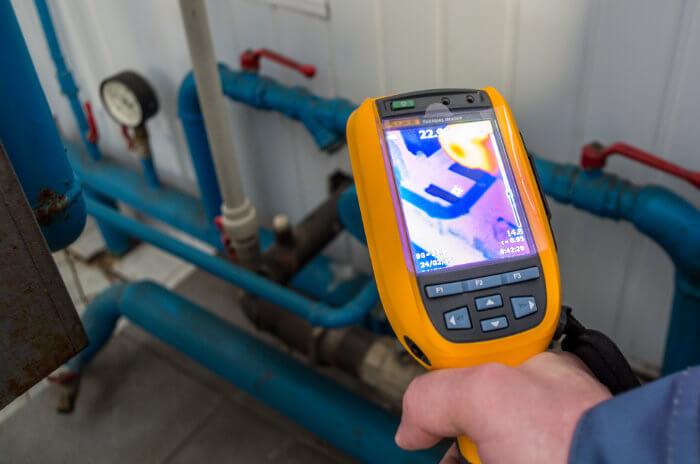
Infrared cameras reveal temperature anomalies caused by water moving through floor slabs, under screed, and behind walls. Thermal imaging is non-contact, non-invasive, and complements acoustic methods for complex cases.
Tracer gas detection
For leaks on pressureless systems or where acoustic methods are inconclusive, a safe hydrogen/nitrogen tracer gas mixture is introduced into the pipe. A calibrated gas detector traces the exact exit point at the surface.
Written report issue
Every survey concludes with a detailed written report documenting the leak location, depth, estimated flow rate, method of detection, supporting photographs, and recommended repair method. Accepted by all major insurers.
Insurance liaison support
We work directly with loss adjusters and home insurance teams. Our reports are formatted to meet insurer requirements, reducing claim processing time. We can attend site with the loss adjuster on request.
What is acoustic leak detection?
Acoustic leak detection is a specialist surveying technique that locates hidden water leaks without breaking up floors, walls, or gardens. When pressurised water escapes through a crack or joint failure, it generates a distinctive broadband sound that travels through the pipe and surrounding ground. Trained engineers using calibrated ground microphones and electronic correlators can hear this signal and use time-of-flight mathematics to pinpoint the leak to within a few centimetres — before a single slab is lifted.
Why non-invasive methods matter in London properties
London's housing stock presents particular challenges for leak tracing. Victorian and Edwardian terraces often have lead and early copper supply pipes buried under suspended timber floors, quarry tiles, and original stone flags — materials that cannot be easily reinstated if damaged by speculative excavation. Modern flats built over basement car parks, properties with underfloor heating screed, and period homes with ornate tiled hallways all carry a high reinstatement cost if the wrong approach is taken. Acoustic and thermal survey methods locate the leak precisely first, meaning the opening — if one is required at all — is small, targeted, and easily repaired. Insurance policies typically require evidence that the minimum necessary disturbance was made, making a pre-excavation acoustic survey standard practice.
Common causes of concealed water leaks
The most frequent sources of hidden leaks in London properties are joint failures on copper or plastic supply pipes where compression fittings have been disturbed over time; hairline cracks in copper pipe caused by freeze-thaw cycles or ground movement; pinhole corrosion in older lead service pipes; and defective connections to underground stopcock assemblies. In new-build and converted properties, underfloor heating circuits with sub-standard push-fit fittings are increasingly the culprit — a slow seep that saturates screed over months before any surface dampness appears. In all cases the water meter continues running and water bills escalate, often prompting the investigation.
What the acoustic leak detection report includes
At the conclusion of every survey we issue a written report that documents the survey methodology, equipment serial numbers and calibration dates, a scaled site plan showing the pipe route and confirmed leak location, depth to the leak, photographic evidence, an estimate of water loss rate, and a recommended repair method with access dimensions. The report is produced to insurance industry standards and accepted by Aviva, AXA, Zurich, RSA, and all major home insurers as evidence to support a trace and access claim. Where no leak is confirmed, a no-find certificate is issued and no charge applies under our no find no fee terms.
Insurance claim support and trace and access cover
Most buildings insurance policies in the UK include trace and access cover — a section that pays for the cost of locating and exposing a hidden water leak, including the reinstatement of the surface. The acoustic survey report we provide is the primary document insurers require to process a trace and access claim. We can coordinate directly with your insurer's loss adjuster, attend a joint site visit, and provide supplementary documentation if required. Early instruction of an acoustic survey — before any guesswork excavation — protects your policy and avoids dispute with the insurer over whether the reinstatement work was necessary.
Pricing
Acoustic leak detection from £250
A single-zone acoustic survey starts from £250 for a standard residential property — covering the complete cold water supply from the boundary stopcock to the internal meter or first draw-off point. Multi-zone surveys covering hot and cold supplies, underfloor heating circuits, and drainage are quoted on inspection. No find no fee terms available on qualifying jobs.
Common questions
Acoustic leak detection: frequently asked
What is acoustic leak detection in Bow?
Acoustic leak detection is a non-invasive survey technique used in Bow to locate hidden water leaks without excavation. Engineers use ground microphones and electronic correlators to hear the sound of escaping water and calculate the leak position to within centimetres — before any floors, walls, or gardens are opened.
How accurate is acoustic leak detection?
Modern acoustic correlation equipment can locate leaks to within 0.5 metres on metal pipework and within 1–2 metres on plastic pipes under most ground conditions. Combined with ground microphone pinpointing, the confirmed position is typically accurate to 10–30 centimetres — sufficient to make a targeted opening rather than a speculative trench.
Will you need to dig up my property in Bow?
No — the acoustic survey itself is entirely non-invasive. No excavation is required during the detection phase. If a repair is needed, any opening is made precisely at the confirmed leak location, keeping disturbance to an absolute minimum. For many leaks on accessible pipes, the opening is no larger than a single floor tile or a 150mm section of screed.
Does the acoustic leak detection report help with an insurance claim?
Yes. The written report we issue is formatted to meet insurance industry requirements and is accepted by all major home insurers for trace and access claims. It documents the survey method, equipment used, confirmed leak location with a scaled plan, photographic evidence, and recommended repair method — all the information a loss adjuster needs to process your claim without further investigation.